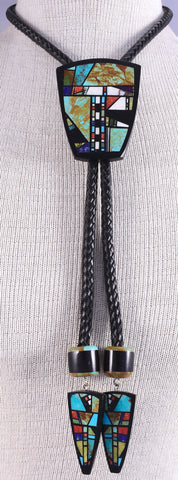
Material: Sterling Silver, Turquoise, Leather cord
Dimensions: Bolo cord is 36 inches. 2-1/8" x 1-5/8"
Weight (in grams): 44
Hallmark/Signature: Sterling M
This vintage Navajo handmade sterling silver bolo tie showcases the enduring elegance of the classic concho design, a form that has been central to Southwestern jewelry for generations. Crafted in sterling silver, the bolo features a beautifully proportioned scalloped concho with deeply stamped sunburst details radiating from a vivid turquoise cabochon at its center. The combination of bright silver, oxidized accents, and vibrant natural turquoise creates a timeless composition that is both bold and understated.
The turquoise stone displays a desirable sky-blue color with subtle natural matrix, providing a striking focal point against the sculpted silverwork. Surrounding the stone, the hand-stamped concho design exhibits the clean lines, symmetry, and precision associated with traditional Navajo silversmithing. The radiating pattern creates movement and depth, drawing attention inward while emphasizing the beauty of the natural gemstone.
Conchos have long served as important decorative elements in Navajo jewelry, prized for their balance of form and function. Their distinctive scalloped shape and stamped ornamentation have become iconic symbols of Southwestern design. In this bolo tie, the classic concho form is executed with remarkable simplicity and craftsmanship, allowing the quality of the silverwork and stone to speak for themselves.
The piece is signed with a simple "M" hallmark. Based on the style, construction, and overall aesthetic, the work bears similarities to jewelry produced by Navajo silversmith Leon Martinez, known for his traditional silverwork and clean, elegant designs. However, without a fully documented hallmark or provenance, an attribution to Martinez cannot be stated with certainty. Regardless of authorship, the bolo is clearly the work of a skilled Navajo artisan and reflects the quality craftsmanship collectors seek in vintage Southwestern jewelry.
Finished with a black braided leather cord and sterling silver tips, this vintage bolo tie is equally suitable for wear, display, or inclusion in a collection of Native American jewelry. With its classic concho form, vibrant turquoise centerpiece, and authentic Navajo craftsmanship, it remains a handsome and enduring example of traditional Southwestern artistry.
The bolo tie became popular in the American Southwest during the mid-20th century and quickly evolved into a unique form of wearable jewelry. Native American artists, especially from the Navajo, Hopi, and Zuni tribes, embraced the bolo tie as a way to showcase their silversmithing and lapidary traditions. Navajo artisans often created bold sterling silver designs featuring natural turquoise and hand-stamped details. Zuni artists became known for intricate needlepoint, petit point, and inlay work using turquoise, coral, jet, and shell. Hopi silversmiths frequently employed their signature overlay technique, incorporating traditional symbols and storytelling imagery. By the 1960s and 1970s, bolo ties had become both a symbol of Southwestern style and an important expression of Native American artistry. Today, vintage and contemporary examples remain highly collectible and continue to reflect the craftsmanship and cultural heritage of these tribes.